Counter Talk, Not Sales Talk: How to Get Straight Answers About CBD on the High Street
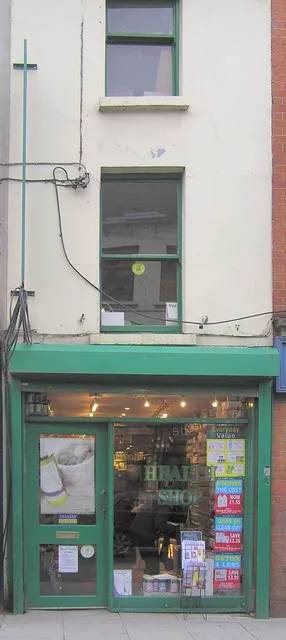
Photo: Kenneth Allen, CC BY-SA 2.0, via Wikimedia Commons
There’s a particular sort of British pause that happens in a health shop when a friendly person behind the counter asks, “Can I help?” You want to ask a sensible question about CBD. You also don’t want to launch into a full seminar, hold up the queue, or admit you’re not entirely sure what you’re doing. So you say, “Just having a look,” and quietly read the same label three times.
That’s a shame, because a good counter conversation is genuinely useful. The trick isn’t becoming a CBD boffin overnight. It’s knowing a handful of questions that get you clear answers, and being comfortable enough to steer the chat back on track when it starts drifting towards a hard sell.
In 2026, the high street CBD shelf is busier than ever — oils, edibles, balms, drinks, the lot. A little preparation goes a long way.
Start With What You Actually Want
Before you go in, decide what you’re shopping for in plain terms. “Something to try in the evening” is a perfectly good starting point. So is “a small bottle I can add to my morning routine” or “an edible that doesn’t taste like a hedge.” You don’t need to diagnose yourself or arrive with a research dossier.
Having one simple aim makes it much easier to spot when a conversation is helping you and when it’s just expanding sideways. If you came in for an oil and suddenly you’re being walked towards a bundle of capsules, a drink and a loyalty card, that’s useful information about the sales approach.
It also helps to know your rough budget. Not because cheap is always best or expensive is always better, but because a clear number in your head makes it easier to say, “That’s a bit more than I was planning to spend today.”
The Three Questions Worth Asking Every Time
You can have a perfectly productive CBD conversation with three questions. They’re not technical traps. They’re just good, ordinary retail questions.
1. “How strong is this, and how does that compare to the others?”
Strength can be presented in different ways — milligrams per bottle, milligrams per drop, percentages — and it’s not always obvious how one product compares with another on the shelf. Ask the person to translate it into normal language. If they can’t, or they brush the question aside, that tells you something.
A useful follow-up is: “What sort of routine do people usually use this one for?” You’re listening for a sensible, moderate answer, not a miracle claim.
2. “Can you show me the batch testing information?”
This is the question that separates a shop that knows its stock from one that’s simply shifting boxes. Batch testing — sometimes called a certificate of analysis or COA — is a lab report linked to a specific production batch. It can cover things like cannabinoid content and contaminants.
You don’t need to read the whole document at the counter. You just want to know it exists, is current and can be seen or requested. A good retailer will be relaxed about this. A vague wave towards “the website” might be fine, but a defensive reaction is worth noting.
3. “What’s the carrier oil?”
For CBD oils, the carrier oil is what the CBD sits in. Common examples include hemp seed oil, olive oil and MCT oil — often derived from coconut. This matters because some people have preferences or dietary considerations, and because carrier oils can affect taste and texture.
It’s also a nice, concrete question. It doesn’t require you to know anything about cannabinoids, and it gives you a feel for whether the person has actually looked at the label.
How to Spot a Pushy Upsell
A helpful upsell sounds like, “If you’re after something for evenings, this one is similar but a bit stronger — do you want to compare the labels?” A pushy upsell sounds like, “You’ll need this too, and this, and honestly everyone starts on the strongest one.”
Watch for a few classic moves. One is the false urgency: “This is the last one” or “the price goes up tomorrow” on a product you hadn’t even asked about. Another is the miracle drift, where the conversation slides from general wellness into claims that sound medical. CBD is not a treatment for everything, in this shop or any other. If the sales patter starts sounding like a clinic, slow it down.
Also be wary of the “you’re new, so you need the top-spec option” line. Starting low and simple is generally a more sensible approach than buying the biggest, strongest bottle on the shelf because someone made it sound like the beginner’s choice. You can always go back for more. You can’t un-buy a bottle that’s far stronger than you wanted.
A Few Plain-English Scripts
You don’t need to memorise these word for word. Just borrow the shape.
When you want the short version: “I’m new to this. Can you give me the two-minute version of the difference between these three oils?”
When the chat is getting too much: “Thanks — that’s helpful. I think I just want to compare these two labels and have a think.”
When you want to check testing: “Do you have batch testing for this one? I’d like to know it’s there before I buy.”
When you’re being upsold: “I’ll stick with what I came in for today, but I’ll bear that in mind.”
When you want to leave without buying: “I’m going to mull it over. Thanks for your help.”
That last one is allowed. You are not obliged to buy anything because someone spent five minutes talking to you. A decent shop would rather you leave happy than leave with the wrong bottle.
Pharmacies, Health Shops and Market Stalls
Different settings have different vibes. A pharmacy counter may be more clinical and rushed; a health shop may be chattier; a market stall may be run by someone who really knows their range — or someone who’s mostly there to shift units. The questions stay the same.
At a market stall, ask whether the batch information can be sent to you or found online before you buy. At a pharmacy, don’t be afraid to ask for the label in your hand and read it yourself. In any setting, if you feel rushed, it’s fine to step back and say, “I’ll have a proper look and come back.”
The Quiet Confidence Bit
You don’t need to become an expert to shop well. You need a rough idea of what you want, three clear questions, and permission to say no. That’s it. The counter should be there to help you choose, not to test you.
So next time you’re standing in front of the CBD shelf and someone asks, “Can I help?”, try a proper question instead of “just looking.” You might be surprised how quickly the conversation becomes useful — and how much easier it is to walk out with something that actually suits you.